Garage Organization on a Budget: Where to Start
Last updated: 2026-08-02 · 5 min read

The garage is where organization goes to die. That is not an insult — it is just the reality of a space that gets used for everything except what it was designed for. Boxes from the last move, sports equipment from a phase that lasted three months, a shop vac you definitely need but cannot locate. I have been there. The good news is that a garage does not require a big renovation or a custom cabinetry budget to function well. It requires a clear starting point, a few decisions made in the right order, and storage that actually earns its keep. Here is how to get there without spending more than you need to.
Do the Purge Before You Buy Anything
I know it is tempting to order bins and hooks before you have touched a single box. Resist it. The number one budget mistake in garage organization is buying storage for stuff you should have gotten rid of.
Pull everything out onto the driveway. Group it into four categories: keep, donate, trash, and relocate (things that wandered into the garage but belong somewhere else in the house). Be ruthless about the keep pile. If it hasn't been touched in two years and has no specific upcoming use, it goes.
Once you know what you are actually keeping, you can buy the right amount of storage — not too much, not too little.
Sort What Stays Into Zones
Before a single shelf goes up, decide on your zones. A zone is just a dedicated area for a category of stuff. Common garage zones include: lawn and garden, automotive, sports and recreation, tools, seasonal decor, and overflow household.
Write them down. Sketch the garage footprint on paper and assign each zone a rough location based on how often you use it. Frequently used things go near the door or at eye level. Seasonal stuff can go high or deep. This sketch will save you from reorganizing twice.
The goal is that anyone in the household can find something without asking you. That is the real test of a working system.
Start With Vertical Wall Space
Floor space in a garage is precious. Walls are almost always underused. Getting things off the floor — bikes, tools, extension cords, garden hoses — immediately makes the space feel workable and cuts down on the 'I can't find anything' problem.
Magnetic hooks are one of the highest-value, lowest-cost moves you can make here. Heavy-Duty Magnetic Hooks (20-Pack) Heavy-Duty Magnetic Hooks work directly on metal garage doors or metal shelving units — no drilling required, fully repositionable while you are still figuring out your layout. Hang tools, cords, and lightweight bags from them.
For heavier items like bins or garden supplies, look at your wall stud spacing (typically 16 inches on center in a standard garage) and add a basic wire shelf or bracket system rated for the weight you need. A 24-inch deep shelf at about 72 inches high is a good standard for bulky seasonal items you want out of the way.
Get the Right Bins for the Long Haul
Clear bins beat opaque ones every time. You should be able to see what is inside without pulling the bin off the shelf. Label the front anyway — yes, even on a clear bin. I label mine by category and contents. My fiance thinks this is excessive. My fiance has also never once asked me where something is, so I consider that validation.
For anything that needs to move around — a rolling bin is worth every penny. Stackable Storage Bins with Wheels (4-Tier) Stackable Storage Bins with Wheels let you reconfigure as your needs change, and rolling them out to reach the back ones takes about three seconds instead of lifting and shuffling an entire shelf.
For soft goods like off-season sleeping bags, old blankets, or spare pillows that somehow ended up in the garage, vacuum storage is a game changer. Vacuum Storage Bags with Hand Pump (20-Pack) Vacuum Storage Bags with Hand Pump compress bulky items down significantly and keep moisture and pests out — both real concerns in a garage environment.
Use the Ceiling If You Have It
If your garage has at least nine feet of ceiling height, overhead storage is essentially free square footage. Ceiling-mounted platforms (available at most home improvement stores for around $100-$150) can hold 300-600 pounds and are ideal for bins you only access a few times a year — holiday decor, camping gear, seasonal sports equipment.
Measure your clearance before buying. You want at least seven feet of clearance between the floor and the bottom of any overhead platform so you are not ducking every time you walk through. Most platforms mount to joists, so locate yours first with a stud finder.
Handle Small Parts and Hardware With a Label-First System
Loose screws, zip ties, picture hooks, spare batteries — this category of small stuff is where garages quietly descend into chaos. A drawer cabinet with small compartments is the classic solution, but any system works as long as it is labeled and consistent.
The principle: every type of small item gets exactly one home. If a screw does not have a home, you add a home before you set it down. This sounds like more work up front and it is, briefly. It saves enormous amounts of time over the next five years.
For hanging smaller tools and accessories near your workbench, Heavy-Duty Magnetic Hooks (20-Pack) magnetic hooks and a simple pegboard panel are about as budget-friendly as it gets. Pegboard runs roughly $0.50-$1.00 per square foot and hooks are reusable and repositionable.
Keep Maintenance Simple
A garage system only works if it can be maintained with minimal effort. That means two things: every item has an assigned home, and restocking or putting things away takes fewer than thirty seconds per item.
Set a quarterly reset — once every three months, do a 20-minute walk-through. Check that things are in their zones, toss anything that crept in and doesn't belong, and adjust the system if your needs have changed. This is not a full reorganization; it is a tune-up.
Avoid the trap of making your system so complicated that only you can maintain it. If a family member or roommate cannot figure it out without a tutorial, simplify.
The takeaway: You do not need to do this all at once and you do not need to spend a lot. Purge first, decide your zones second, add storage third — in that exact order. The most expensive mistake in garage organization is buying containers for a layout you haven't planned yet. Get the order right and even a modest budget goes a long way.
Everything mentioned in this guide
Heavy-Duty Magnetic Hooks (20-Pack)
View product →
Stackable Storage Bins with Wheels (4-Tier)
View product →
Vacuum Storage Bags with Hand Pump (20-Pack)
View product →
Heavy-Duty Storage & Moving Bags (6-Pack)
View product →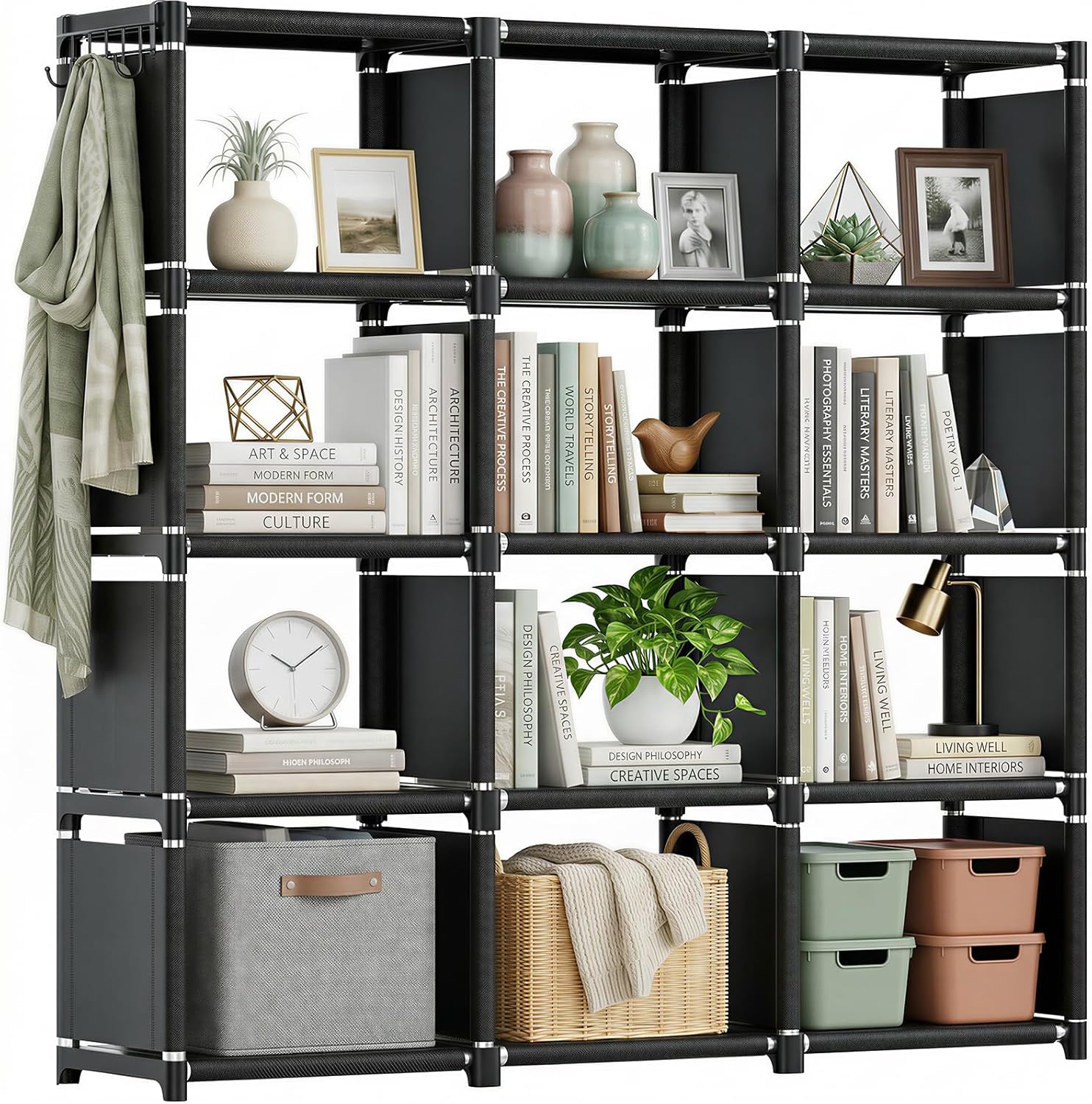
12-Cube Storage Bookshelf (Metal)
View product →